



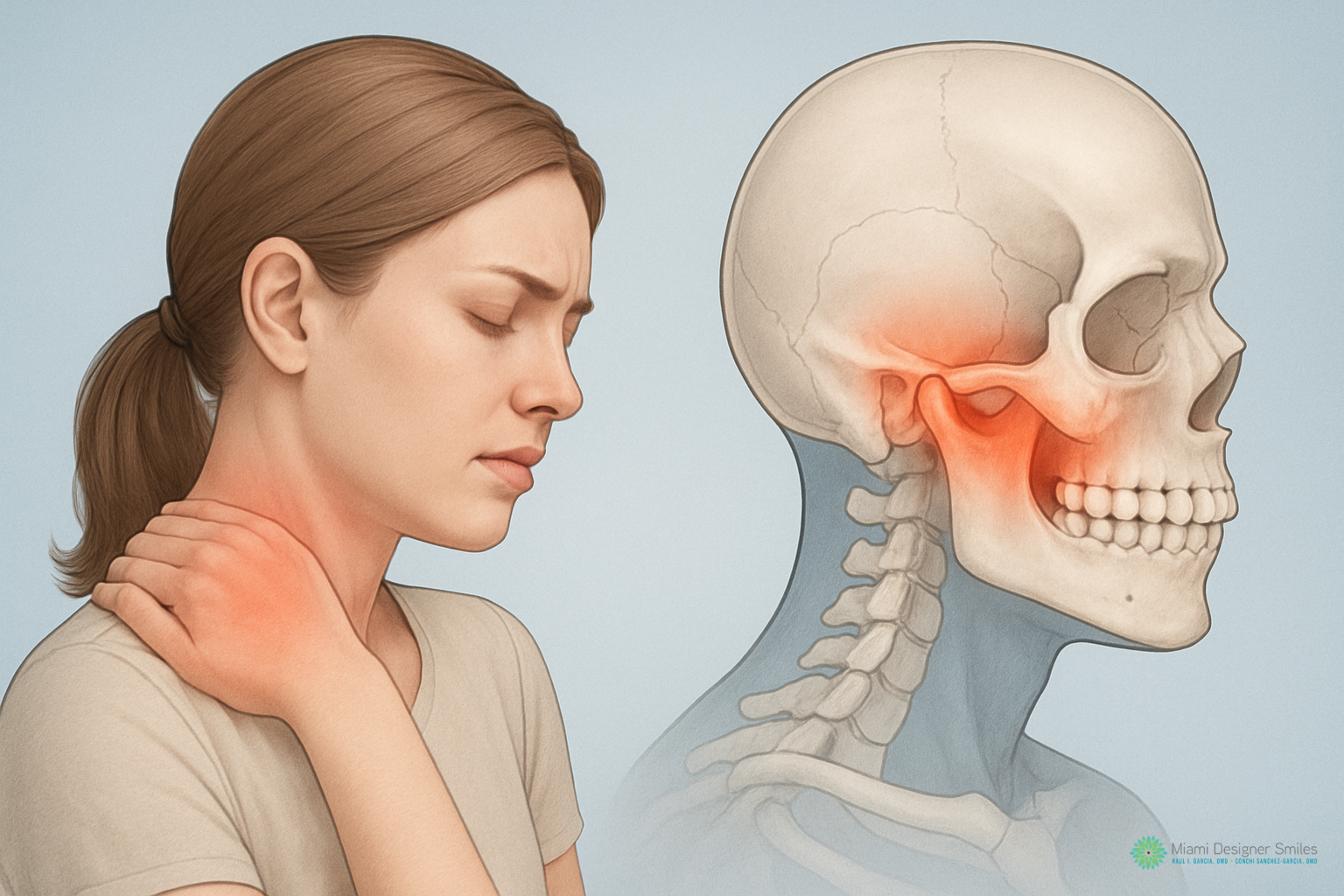
At Miami Designer Smiles, we often see patients with a range of dental symptoms that are indicative of something more complex than a simple toothache or cavity. One such example is the connection between Fibromyalgia and TMJ Disorders. This relationship may not be immediately apparent to someone lacking extensive expertise in anatomy, however, understanding this intricate relationship is crucial in devising an effective treatment strategy.
An Introduction to Fibromyalgia and TMJ Disorders
The TMJ, or temporomandibular joint, is a joint that connects your jawbone to your skull, facilitating its movement. By allowing you to chew, yawn, and speak, this joint serves as a highly important part of our day-to-day routine. Any disorder that impacts the proper functioning of the TMJ can lead to pain and discomfort, disrupting our quality of life. This is known as Temporomandibular Joint Disorder or TMJD.
Fibromyalgia, on the other hand, is a condition characterized by widespread musculoskeletal pain, fatigue, sleep, memory and mood disruptions. While the exact cause of fibromyalgia is still unknown, it’s believed to amplify pain by affecting the way our brain processes pain signals.
Fibromyalgia and TMJ: Understanding the Connection
Consider this: When your body experiences pain due to fibromyalgia, isn’t it natural to assume that this heightened sensitivity has an impact on other puts of your body experiencing discomfort? That’s where the TMJD comes into the picture. People with fibromyalgia often report experiencing TMJD. The link between fibromyalgia and TMJD lies in the common pathway of pain perception and response in the central nervous system.
Signs and Symptomatology
Identifying TMJ Disorders
TMJD symptoms can vary greatly and may include:
- Pain in the TMJ or jaw muscles.
- Frequent headaches or neck aches.
- Difficulty opening or closing the mouth.
- Clicking or popping sounds in the joint when opening or closing the mouth.
Fibromyalgia Symptoms
While the symptoms of fibromyalgia can mimic many other conditions, they often include:
- Widespread pain: Pain is generally constant and felt all over the body. It may be worse in the morning and decrease as the day progresses.
- Fatigue: Fibromyalgia patients often wake up feeling tired, despite having slept for long hours. Their sleep may be disturbed by pain, or other sleep disorders such as sleep apnea and restless legs syndrome.
- Cognitive difficulties: Also referred to as “fibro fog,” this symptom impairs the ability to focus, pay attention, and concentrate on tasks.
Treatment Options at Miami Designer Smiles
Our team of skilled dentists, Dr. Concepcion Sanchez-Garcia and Dr. Raul Garcia, provide comprehensive care to treat not just the symptoms but the entire patient. Our first step always involves a thorough evaluation, which may include a physical examination, medical history, and necessary imaging studies. This allows us to get an understanding of your overall health situation.
TMJ Disorder Treatment
At Miami Designer Smiles, we focus on non-surgical and minimally invasive methods to manage TMJD. These may include:
- Physiologic Dentures: If missing teeth are causing misalignment, we may suggest the use of physiologic dentures. They mimic the natural teeth’s size, shape, and function, thereby restoring your bite’s normal function.
- Neuromuscular Orthodontics: This advanced treatment method considers not just the teeth but also the muscles, joints, nerves, and blood vessels that could affect the bite.
Fibromyalgia Management
While fibromyalgia can’t be cured, a holistic approach involving lifestyle modifications along with medication, if necessary, can help manage symptoms. The struggle with fibromyalgia is unique to every patient, hence our treatment approach for managing fibromyalgia is personalized to meet individual needs.
The Bottom-Line:
At Miami Designer Smiles, we prioritize complete health dentistry, which means we don’t just look at your teeth in isolation. We address oral health issues as part of your overall health. Unraveling the connection between Fibromyalgia and TMJ disorders is part of our commitment to providing comprehensive dental care. When you come into our office, our priority is to listen, understand, and address your needs to ensure your smile—and your health—is as bright as possible.