



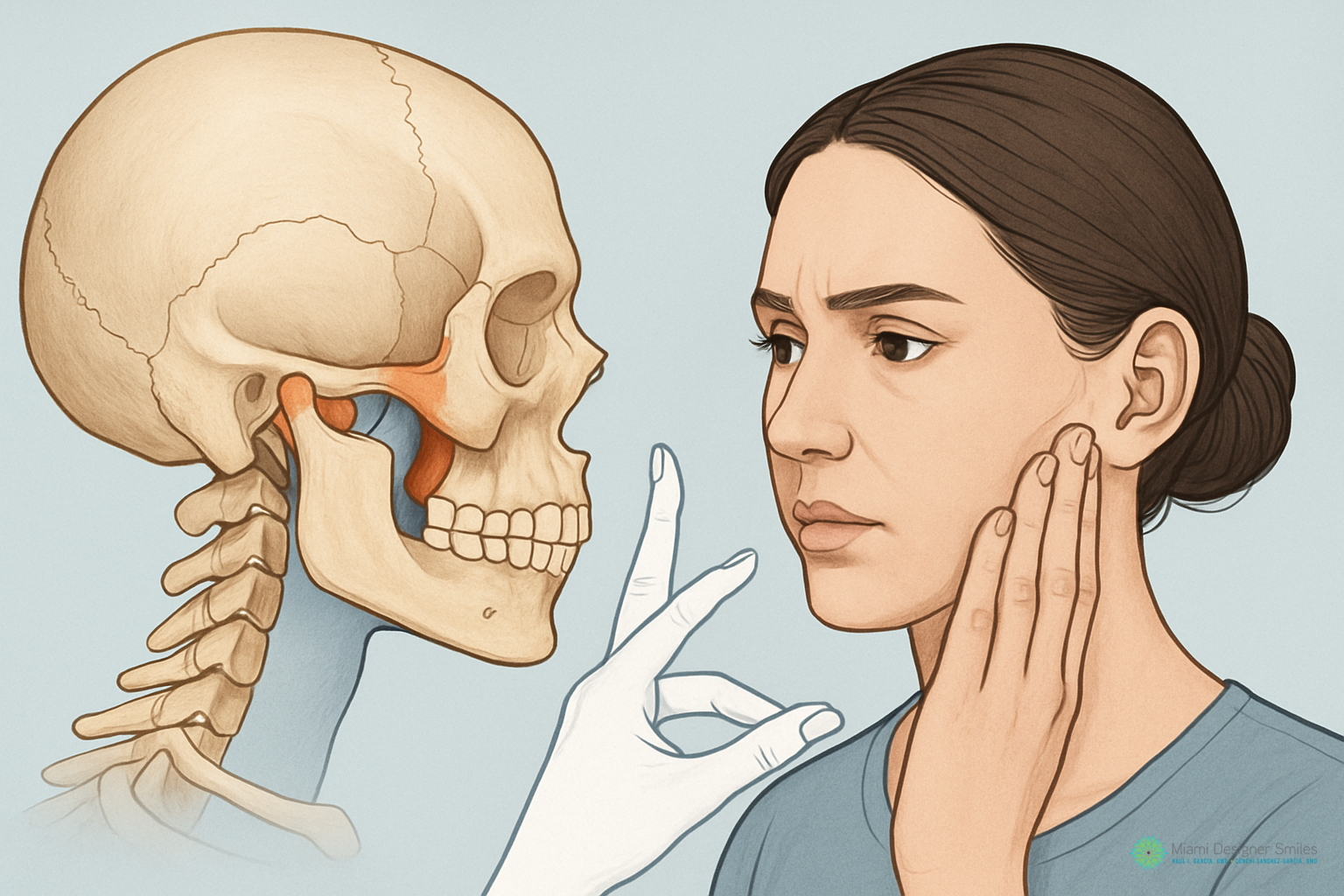
Understanding and managing conditions like Ehlers-Danlos Syndrome and temporomandibular joint disorders lie at the heart of our practice at Miami Designer Smiles. Dr. Concepcion Sanchez-Garcia and Dr. Raul Garcia are passionate about helping their patients navigate through such interconnected oral and systemic health challenges. This comprehensive guide dives deep into Ehlers-Danlos Syndrome and TMJ disorders, their relationship, and how to manage them for an improved quality of life.
Understanding Ehlers-Danlos Syndrome (EDS)
Ehlers-Danlos Syndrome (EDS) is a group of hereditary disorders that affect your body’s connective tissues, which provide support to skin, tendons, ligaments, blood vessels, internal organs, and bones. There are 13 unique types of EDS, all involving a different aspect of this complex network of tissues.
EDS can cause a range of symptoms, from mildly loose joints to life-threatening complications. Common signs include:
- Joint hypermobility
- Stretchy skin
- Abnormal scar formation and wound healing
People with EDS often experience pain in the muscles, joints, or nerves and can be more susceptible to physical injuries.
Temporomandibular Joint Disorders (TMJ)
Temporomandibular joint disorders (TMJ disorders) focus on issues with the jaw joint and muscle disorders associated with it. The TMJ joins your jawbone to your skull, and when this complex joint is affected, it can result in pain within the jaw and the surrounding muscles that control jaw movement.
Symptoms of TMJ disorders include:
- Facial pain or tenderness
- Jaw pain
- Aching pain in and around your ear
- Difficulty chewing or pain while chewing
- Locking of the TMJ, making it difficult to open or close your mouth
How Does Ehlers-Danlos Syndrome Connect to TMJ Disorders?
Patients with Ehlers-Danlos Syndrome are frequently more susceptible to TMJ disorders. The hypermobility and flexibility associated with EDS can put added strain on the TMJ, leading to the development of TMJ disorders. This can result in chronic jaw pain, difficulty chewing, and other related symptoms, significantly impacting an individual’s daily life and comfort.
Identifying TMJ Disorders in EDS Patients
For patients with Ehlers-Danlos Syndrome, routine assessment for TMJ disorders is crucial. At Miami Designer Smiles, we understand the importance of early detection and management to prevent further complications, such as osteoarthritis or joint degeneration.
Managing TMJ Disorders in EDS Patients
At our clinic, our patient-focused approach to treatment integrates the latest advances in TMJ and neuromuscular orthodontics. Recognizing the delicate balance between hard and soft tissues in the head, neck, and back, we use innovative orthodontic treatments designed to reposition these tissues and relieve strain on the TMJ.
Depending on the complexity and severity of the TMJ disorder, we use a combination of therapies to manage symptoms including:
- Pain Relief: Analgesics, physiotherapy, or hot and cold compresses can help manage immediate pain.
- Dietary Inputs: We may suggest a soft food diet to reduce the stress on the TMJ.
- Physical Therapy: Specific exercises can help strengthen jaw muscles, increase mobility, and promote healing.
- Dental Appliances: Mouthguards or oral splints can provide relief from clenching or grinding the teeth, one of many factors that can contribute to TMJ disorders.
- Addressing Underlying Dental Issues: Restorative treatment or orthodontic therapy can correct a misaligned bite, a common cause of TMJ disorders.
The Role of Neuromuscular Orthodontics
Beyond providing immediate symptomatic relief, our goal at Miami Designer Smiles is to address the underlying issues that contribute to TMJ disorders in patients with EDS. This is where the role of neuromuscular orthodontics steps in.
By carefully examining the complex relationship between teeth, jaw joints, and muscles, we address the root of the issue rather than the symptoms alone. Dr. Garcia and Dr. Sanchez-Garcia use neuromuscular orthodontic treatments to realign the jaw and relieve the strain on the TMJ, aiding in long-term symptom management for patients with EDS and TMJ disorders.
Concluding Thoughts
As noted in Dayami’s journey with Miami Designer Smiles, the treatment approach extends beyond merely resolving the symptoms. For EDS patients dealing with TMJ disorders, the focus should be on improving their quality of life and overall oral-systemic health.
While understanding and managing Ehlers-Danlos Syndrome and TMJ disorders can be complex, the dedicated team at Miami Designer Smiles is ready to guide you every step of the way. With us, your smiles are in expert hands.